
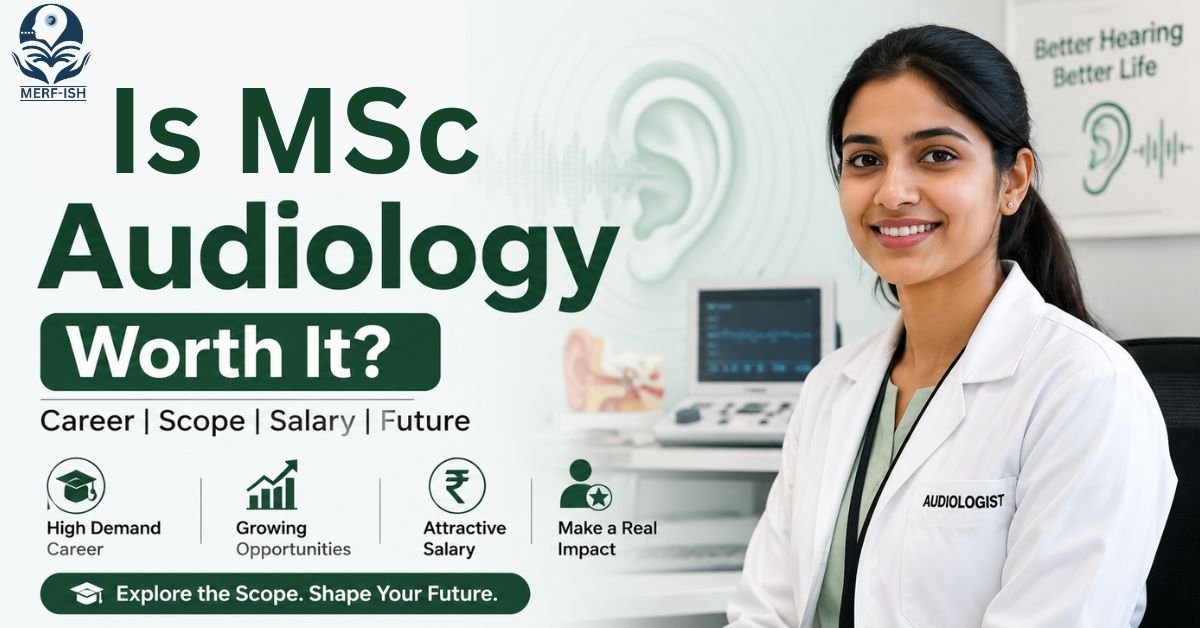
If you’re standing at a crossroads, wondering whether pursuing an MSc in Audiology makes sense for you, you’re not alone. Thousands of graduates ask this question each year before committing to a two-year postgraduate program. The decision isn’t straightforward—it involves weighing career prospects, financial investment, personal interest in the field, and long-term goals. This guide walks through the real benefits, challenges, and opportunities so you can make an informed choice.
Explore MERF Institute’s MSc Audiology program to see what a quality postgraduate education looks like.
What exactly is an MSc in Audiology?
An MSc in Audiology is a two-year postgraduate degree that trains professionals to diagnose, manage, and prevent hearing and balance disorders. Unlike undergraduate programs that offer a broad overview, a master’s dives deep into clinical techniques, research methodology, and specialized assessment procedures. The program combines classroom learning with hands-on clinical practice, meaning you don’t just study theory—you work directly with patients who have hearing loss, vestibular issues, and auditory processing disorders.
The curriculum is demanding and evidence-based, designed to prepare you for professional practice in diverse settings: hospitals, clinics, private practices, research institutions, and government health programs.
Why Choose MSc Audiology? Real Benefits
Specialization in a Growing Field
Audiology is one of the fastest-growing healthcare professions. The WHO reports that over 1.5 billion people globally experience hearing loss, and that number is climbing. India alone has an estimated 63 million people with hearing impairment, creating enormous demand for skilled audiologists. When you earn an MSc, you’re not just getting a degree—you’re positioning yourself in a specialty where expertise is genuinely needed.
Better Career Prospects and Salary
An MSc degree opens doors that a bachelor’s degree alone cannot. You become eligible for roles with higher responsibility and compensation: senior clinical audiologist, audiology manager, researcher, educator, and consultant. Starting salaries for MSc graduates in India typically range from ₹4-6 lakhs annually, with experienced professionals earning ₹10+ lakhs. Private clinics and corporate healthcare settings often reserve senior positions exclusively for master’s degree holders.
Research and Teaching Opportunities
If you’re intellectually curious or want to contribute to the profession itself, an MSc gives you credibility in research and academia. You can publish findings, teach the next generation, and shape the future of audiology in your region. This path is particularly valuable if you see yourself as someone who wants to advance the field rather than just practice within it.
Professional Credibility and Respect
In healthcare, credentials matter. An MSc degree signals to employers, patients, and peers that you’ve invested in comprehensive training and are committed to professional excellence. This translates into better job negotiations, patient trust, and respect within the medical community.
Real Challenges to Consider
Time and Financial Investment
Two years is a significant time commitment, especially if you’re already working. Program fees vary—government institutions charge ₹2-5 lakhs total, while private colleges can charge ₹8-15 lakhs or more. Add living expenses, materials, and opportunity costs. The ROI is positive for most graduates, but you need to be realistic about affordability.
Intense Curriculum and Workload
The coursework is rigorous. You’ll study anatomy, neurology, electroacoustics, hearing aid fitting, vestibular assessment, research methods, and more. Clinical placements run alongside classes, meaning you’re juggling theory and hands-on practice throughout. It’s not a light load—expect to be fully committed.
Geographic and Job Market Limitations
While audiology is growing, job markets vary by region. In metropolitan areas, opportunities are abundant. In smaller towns or rural regions, jobs may be limited. If you’re aiming for higher positions or running a private practice, location strategy matters.
Critical Questions to Ask Yourself
Before deciding, honestly answer these:
1. Do you have a genuine interest in helping people with hearing and balance disorders? (Passion matters—this isn’t a field where you cruise through without care.)
2. Can you afford the tuition and living expenses without crippling student debt?
3. Are you willing to be fully engaged for two years, balancing coursework and clinical placements?
4. Do you want to work in healthcare long-term, or is this a temporary detour?
5. Are you open to working in diverse settings, or do you have rigid preferences that might limit job prospects?
The Bottom Line
Yes, an MSc in Audiology is worth it—but it’s worth it for the right reasons. If you’re driven by genuine interest in the field, want career stability, and are willing to invest time and money, an MSc is one of the best decisions you can make. You’ll enter a growing profession with strong job security, competitive salaries, and meaningful work. If you’re chasing it for prestige alone or expect an easy path, reconsider.
Want to explore a world-class MSc program? Learn more about audiology postgraduate education and take the next step in your hearing healthcare career.
Make Your Decision With Confidence
An MSc in Audiology represents a clear path to meaningful healthcare work, professional growth, and financial stability. Whether it’s worth pursuing depends on your personal circumstances and genuine interest in the field. If hearing healthcare excites you, opportunities are waiting. Start by exploring audiology programs
and connecting with professionals already in the field. Ask questions, visit clinics, and make a choice you won’t second-guess.
Frequently Asked Questions
1. How long does an MSc in Audiology take?
Most MSc programs in Audiology take two years of full-time study. Some institutions offer part-time options that may extend to three years, allowing working professionals to manage their schedule.
2. Do I need a bachelor’s in audiology to pursue an MSc?
Most programs require a bachelor’s degree in audiology or a related field (speech-language pathology, speech and hearing science). A few programs may accept graduates from other health sciences backgrounds, but having an audiology background is strongly preferred.
3. What jobs can I get after an MSc in Audiology?
Career paths include clinical audiologist, hearing aid specialist, audiology manager, university lecturer, audiology researcher, industrial audiologist, pediatric audiologist, and consultant to healthcare organizations. Many graduates also establish private audiology clinics.
4. Is audiology primarily a clinical field, or are there research opportunities?
Both. While most audiologists work clinically, the field has a strong research component. An MSc equips you to pursue research in auditory processing, hearing aid technology, vestibular rehabilitation, and public health audiology.
5. Will I regret investing time and money in an MSc in Audiology?
Unlikely, if you enter the field with the right mindset. Surveys show that audiology graduates report high job satisfaction, stable employment, and positive ROI within 3-5 years of graduation. The key is ensuring that audiology genuinely excites you.