


Have you ever been in a restaurant, classroom, meeting, workplace, or family gathering where you can clearly hear someone speaking but struggle to understand the actual words?
You may find yourself thinking, “I can hear, but I can’t understand.”
Difficulty understanding speech in noisy environments can be frustrating, particularly when it happens regularly. Although hearing loss can contribute to this difficulty, several other factors can affect how we understand speech when background noise is present.
1.What Is Speech-in-Noise Difficulty?
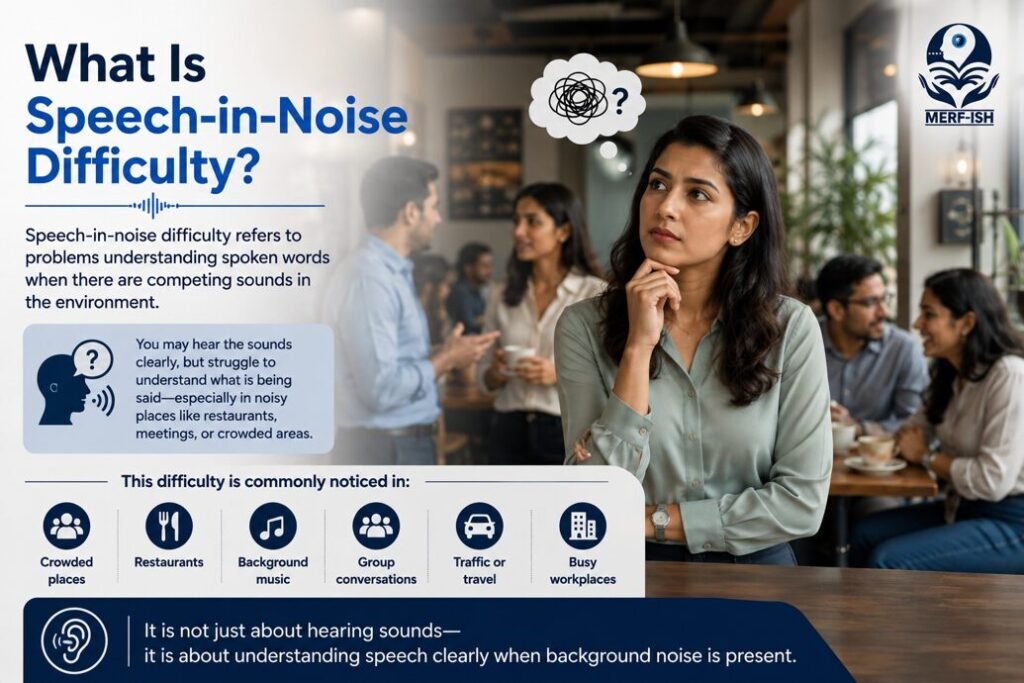
Speech-in-noise difficulty refers to problems understanding spoken words when there are competing sounds around you.
You may notice this difficulty when:
- Several people are talking at the same time
- Background music is playing
- You are in a busy restaurant
- You are travelling in a noisy vehicle
- You are in a crowded workplace
- Someone is speaking from another part of the room
In these situations, your ears need to detect the speech signal while the brain works to separate the speaker’s voice from competing sounds.
Hearing Sound and Understanding Speech Are Different
Hearing is not simply about detecting whether a sound is present. When someone speaks, the auditory system receives sound information and sends it to the brain, where it is processed and interpreted as meaningful speech. In quiet environments, this process may be relatively easy. In noise, however, the brain has to distinguish important speech information from competing sounds. This is why a person may be able to hear someone talking but still have difficulty understanding what is being said.
2.Why Does This Happen?
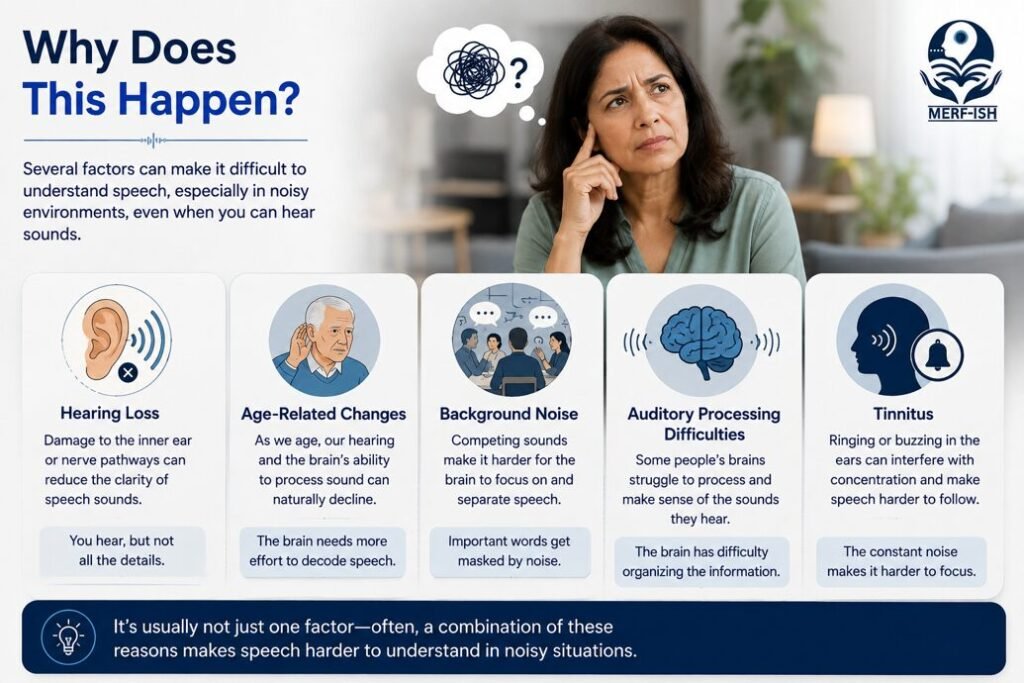
Speech-in-noise difficulty does not necessarily have one single cause. Possible contributing factors include:
1. Hearing Loss
Even mild hearing loss can make conversations more difficult in background noise because certain speech sounds may become harder to hear.
2. Age-Related Changes
Changes in hearing sensitivity and auditory processing with increasing age can make complex listening environments more challenging.
3. Background Noise
Restaurants, public transport, offices and social gatherings may contain multiple competing sounds that make speech more difficult to follow.
4. Auditory Processing Difficulties
Hearing involves both the ears and the brain. Some individuals may have difficulty processing or organising auditory information, particularly when competing sounds are present.
5. Tinnitus and Other Hearing Symptoms
Persistent ringing or buzzing in the ears may make listening more challenging for some individuals, particularly when they need to concentrate on speech.
Common Signs
You may be experiencing speech-in-noise difficulty if you regularly:
- Ask people to repeat themselves
- Say “What?” even though you heard someone speak
- Understand conversations better in quiet environments
- Struggle to follow group conversations
- Find restaurants particularly difficult for conversation
- Prefer to sit close to the person speaking
- Depend heavily on watching the speaker’s face
- Have difficulty when several people are talking
- Feel tired after concentrating on conversations
- Increase the volume of your television or phone
Occasional difficulty does not necessarily indicate a hearing problem. However, frequent or increasing difficulty is worth discussing with a hearing professional.
3.Why Are Restaurants and Crowded Places So Difficult?
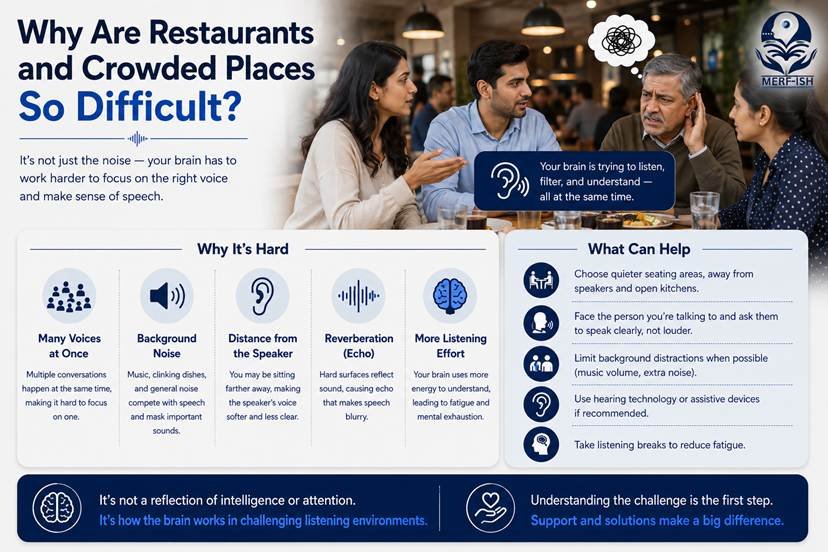
Restaurants are particularly challenging listening environments because conversations, background music, kitchen sounds, dishes, moving chairs and other environmental sounds may occur simultaneously.
The brain has to focus on one person’s voice while ignoring competing sounds. If portions of speech are already difficult to hear because of hearing loss or another auditory difficulty, understanding the complete message can become even harder.
4.Does Speaking Louder Always Help?
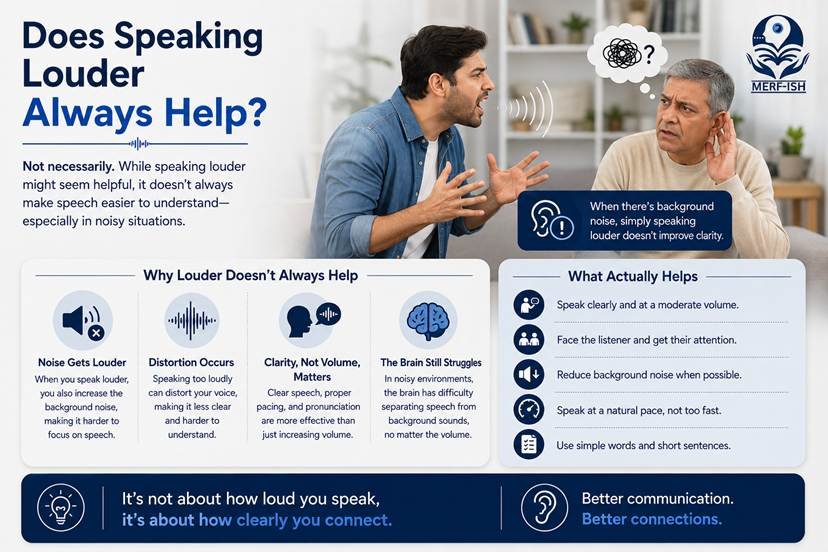
Not necessarily.
Making speech louder does not always make words clearer when the underlying difficulty involves hearing sensitivity, distortion, competing noise or auditory processing.
Instead, modifying the listening environment can sometimes make communication easier.
Simple Ways to Make Conversations Easier
- Choose quieter environments
- Face the person speaking
- Reduce background music or television
- Move closer to the speaker
- Ensure the room is well lit
- Ask people to speak one at a time during group conversations
- Let family members, friends and colleagues know what helps you understand them better
5.How Can You Make Conversations Easier?

Choose quieter environments
If you have difficulty understanding speech in noise, choosing a quieter restaurant or meeting area can make conversations considerably easier.
Face the speaker
Visual information from facial movements can provide additional clues that support understanding.
Reduce background noise
Turn down television or music when having an important conversation.
Move closer
Increasing the distance between you and the speaker can make speech harder to understand, particularly in noisy environments.
Tell others what you need
Let friends, family members or colleagues know that you understand them better when they speak clearly and face you.
6.How Is Speech Understanding Assessed?
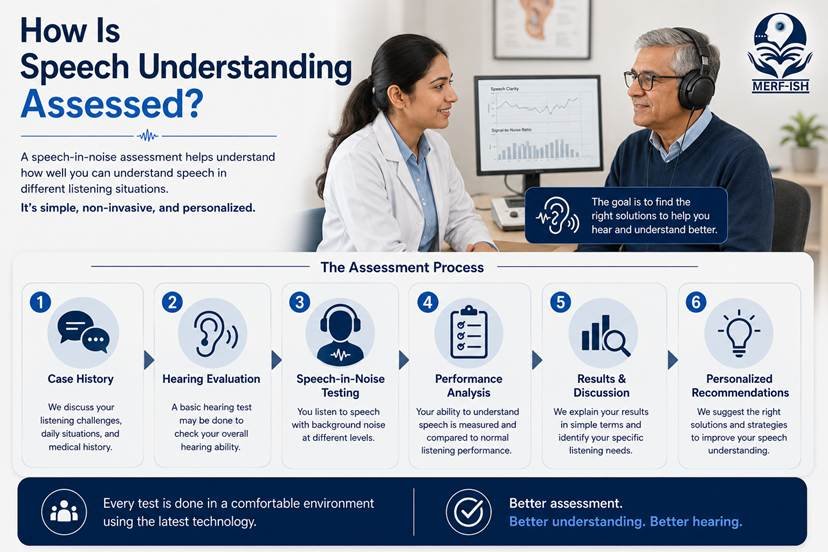
A hearing evaluation may involve more than simply determining whether you can hear different tones.
Depending on your symptoms and clinical needs, an audiologist may assess:
- Case history – understanding your hearing concerns and listening difficulties
- Otoscopy – examination of the ear canal and eardrum
- Pure-tone testing – measurement of hearing sensitivity across frequencies
- Speech testing – assessment of speech detection and understanding
- Additional assessments – further testing where appropriate based on individual symptoms
These assessments help provide a more complete picture of your hearing abilities.
7.When Should You Get Your Hearing Checked?
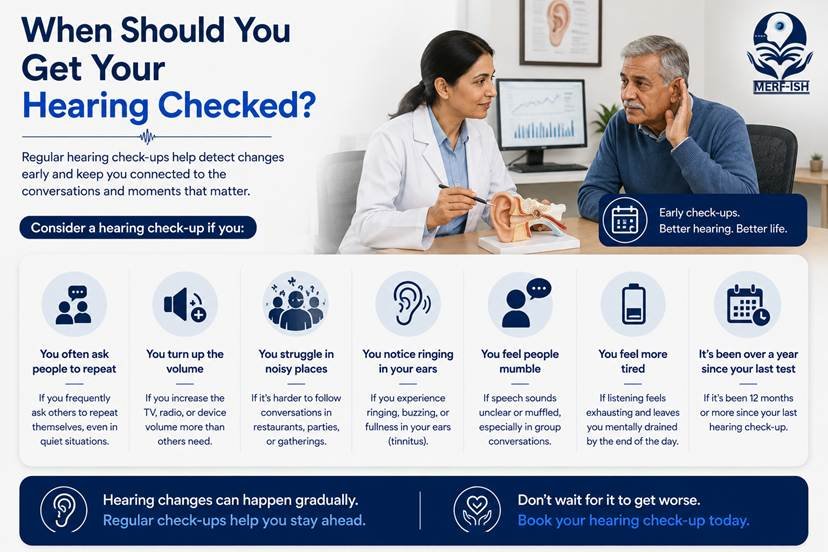
Consider having your hearing evaluated if difficulty understanding speech in noise is becoming frequent or is affecting your everyday communication.
It is particularly important to seek an evaluation if you also experience:
- Persistent tinnitus
- Muffled hearing
- Difficulty hearing certain voices
- Frequently asking people to repeat themselves
- Difficulty following group conversations
- Increasing television or headphone volume
- Difficulty hearing even when someone is speaking nearby
A sudden change in hearing, particularly in one ear, requires prompt medical evaluation.
Don’t Ignore “I Can Hear, But I Can’t Understand”
Being able to detect sound is only one part of effective hearing. Understanding speech—especially in noisy environments—is an important part of everyday communication.
If conversations are becoming increasingly difficult to follow in restaurants, workplaces, social gatherings or other noisy environments, don’t simply assume that you need to “listen harder.”
A professional hearing evaluation can help identify whether hearing loss or another auditory factor may be contributing to the difficulty.
Better hearing isn’t just about hearing sounds—it’s about connecting with the people and world around you.
If you frequently hear speech but struggle to understand words in noisy environments, consider speaking with an audiologist for an appropriate hearing evaluation.