
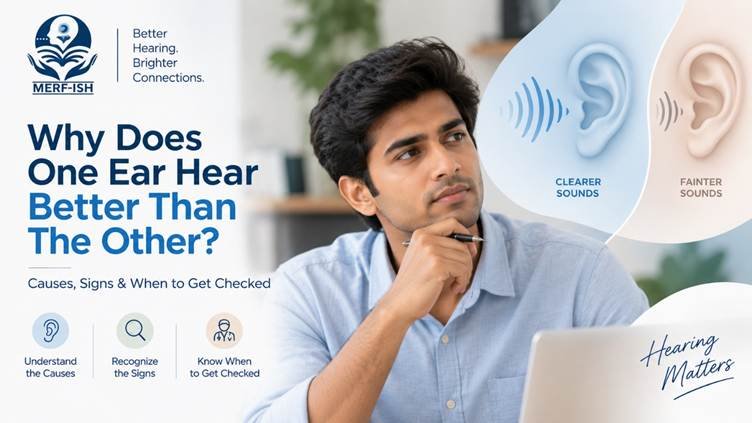
Have you ever noticed that sounds seem clearer in one ear than the other? You might find yourself turning your head during conversations, using one particular ear when talking on the phone, or struggling to understand someone when they speak from one side.
A slight difference between the ears can occur, but a noticeable, persistent, or sudden difference in hearing should not be ignored. There can be several possible causes, ranging from temporary blockages to conditions affecting the inner ear.
1.What Does It Mean When One Ear Hears Better?
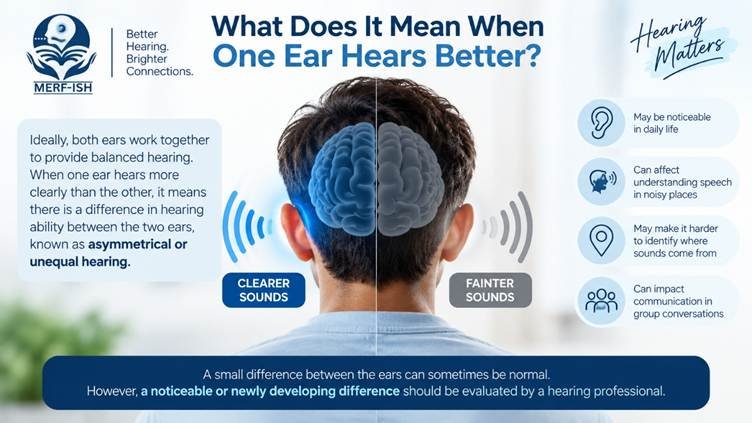
Our ears work together to help the brain understand sounds and determine where those sounds are coming from. When one ear hears less clearly than the other, the brain receives different amounts of information from each side.
This can make certain listening situations more difficult, particularly:
- Conversations in noisy places
- Group discussions
- Following someone speaking from the side
- Identifying where a sound is coming from
- Understanding speech from a distance
The difference may be obvious in everyday life or may only be detected during a hearing test.
2.Why Does One Ear Hear Better Than the Other?
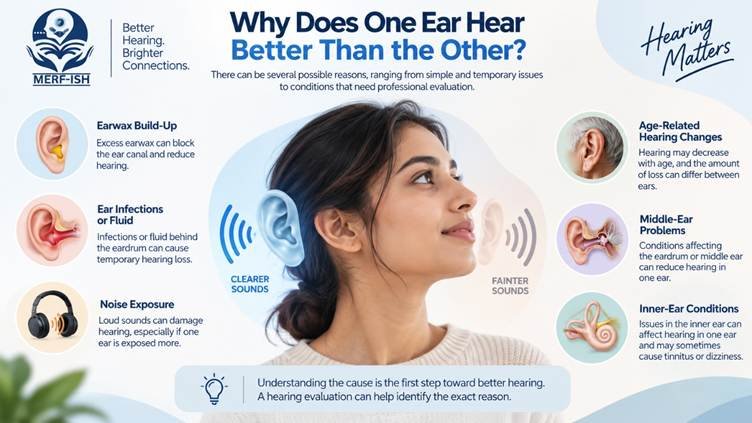
1. Earwax Build-Up
Excess earwax can block the ear canal and reduce the amount of sound reaching the eardrum.
You may notice:
- Muffled hearing
- A blocked or full feeling
- Ringing in the ear
- Reduced hearing in one ear
Avoid putting cotton buds or other objects deep inside the ear, as this can push wax further in or injure the ear.
2. Ear Infection or Fluid
An ear infection or fluid behind the eardrum can temporarily affect hearing. This can sometimes happen after a cold or respiratory infection.
Other symptoms may include ear pain, pressure, fullness, or discharge.
3. Noise Exposure
Repeated exposure to loud sounds can damage the delicate structures involved in hearing.
Unequal noise exposure—for example, being closer to a loud sound source on one side—can potentially contribute to differences between the ears.
Using headphones at excessive volumes for long periods can also increase the risk of noise-related hearing damage.
4. Age-Related Hearing Changes
As people age, hearing sensitivity can gradually decrease. Although age-related hearing loss commonly affects both ears, the amount of hearing loss may not be identical on each side.
Speech, particularly high-frequency speech sounds, may become harder to understand.
5. Middle-Ear Problems
Problems involving the eardrum or middle ear can affect how sound travels toward the inner ear.
Conditions involving pressure regulation or fluid in the middle ear may cause hearing to feel muffled or different between the two sides.
6. Inner-Ear Conditions
The inner ear contains structures responsible for converting sound vibrations into signals that the brain can interpret.
Certain inner-ear conditions can cause hearing changes in one ear and may sometimes occur alongside:
- Tinnitus
- Dizziness
- Balance problems
- Ear pressure
- Distorted hearing
These symptoms should be evaluated by a healthcare professional.
3.What Are the Signs That One Ear Hears Less?
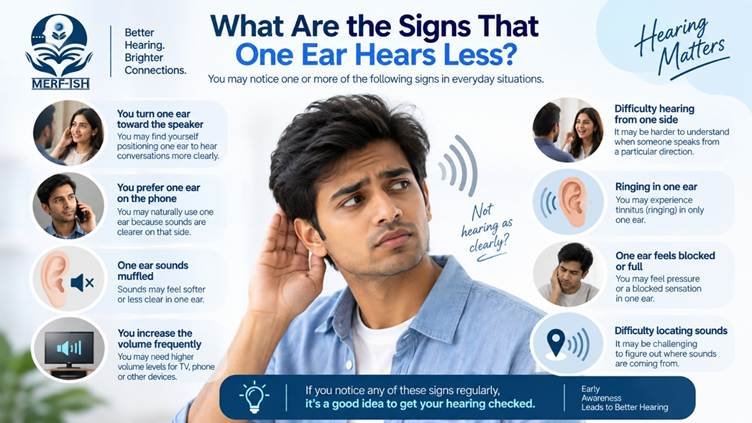
You may have a hearing difference if you regularly:
- Turn one ear toward the person speaking
- Prefer one ear when using the phone
- Find speech clearer on one side
- Notice muffled sound in one ear
- Struggle to hear someone speaking from one particular direction
- Have difficulty following conversations in noisy environments
- Increase the volume of your TV or phone
- Experience ringing in only one ear
- Feel that one ear is blocked or full
Sometimes there are no obvious symptoms, which is why hearing tests can be useful.
Why Is Hearing With Both Ears Important?
Hearing with two ears gives the brain information from both sides.
This helps with sound localization—figuring out where sounds are coming from—and can also make it easier to separate speech from background noise.
For example, in a busy restaurant, your brain needs to focus on one person’s voice while other conversations, music, dishes, and surrounding sounds compete for attention.
If one ear provides significantly less information, listening in these situations may become more challenging.
4.When Should You Get Your Hearing Checked?
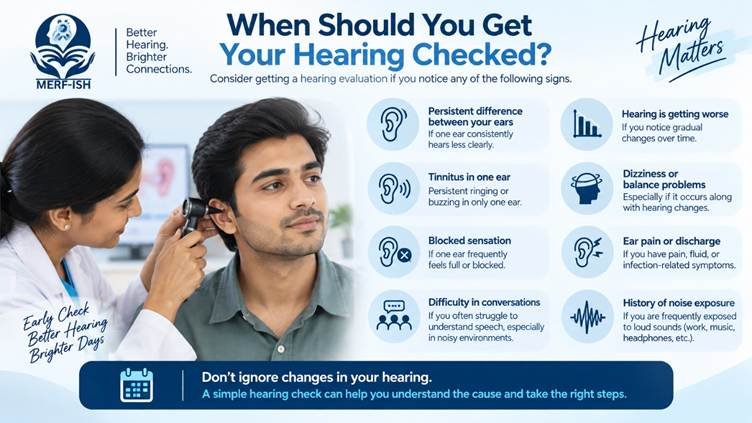
Consider getting a hearing assessment if you consistently notice that one ear hears differently from the other.
A hearing evaluation is especially important when:
- The difference is persistent
- Your hearing is gradually getting worse
- You have persistent or one-sided tinnitus
- You experience dizziness or balance problems
- One ear frequently feels blocked
- You have repeated ear infections
- You have significant noise exposure
- Conversations are becoming difficult to follow
Sudden Hearing Loss Needs Prompt Attention
If hearing suddenly decreases in one ear, don’t wait several days to see whether it gets better.
Sudden hearing loss can sometimes require urgent medical assessment, and early evaluation is important.
5.How Is Unequal Hearing Diagnosed?
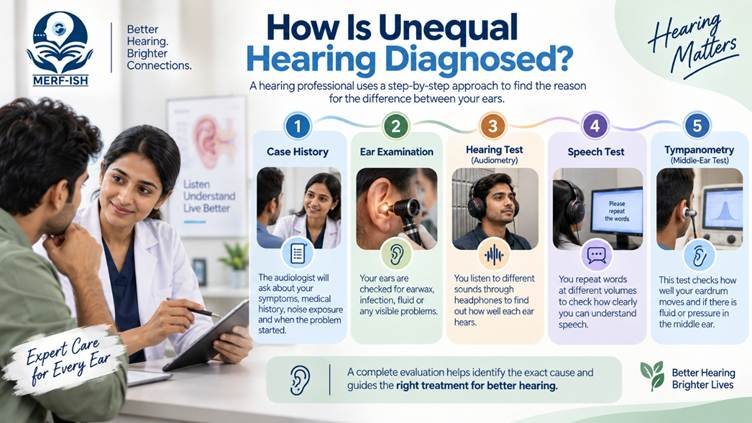
A hearing professional can compare the hearing of both ears using different tests.
Case History
The professional may ask when the hearing change started and whether you have experienced noise exposure, infections, tinnitus, dizziness, or other symptoms.
Ear Examination
The ear canal and eardrum can be examined to look for visible problems such as wax, inflammation, or other abnormalities.
Pure-Tone Hearing Test
You listen to different tones at different frequencies. The results show the softest sounds you can hear in each ear.
Speech Testing
Speech tests can help determine how well you detect and understand spoken words.
Middle-Ear Testing
Tests such as tympanometry may be used to assess the condition and movement of the middle-ear system.
Together, these tests help identify whether there is a difference between the ears and whether further evaluation may be necessary.
Can One Ear Naturally Hear Slightly Better?
Not every small difference between the ears indicates a serious problem.
The important factors are how large the difference is, whether it is changing, how quickly it appeared, and whether other symptoms are present.
Instead of trying to compare your ears yourself, a proper hearing assessment can provide an objective measurement.
Don’t Ignore Changes in One Ear
A difference in hearing can have a simple explanation, such as earwax or temporary middle-ear problems. However, persistent or sudden changes deserve professional attention.
Your hearing plays an important role in communication, awareness of your surroundings, and everyday quality of life. Recognizing changes early can help you understand what is happening and decide what steps may be appropriate.
Final Thought
If one ear consistently seems clearer than the other, don’t simply get used to it. Understanding the reason behind the difference is the first step toward better hearing awareness.