
When you speak a sentence, hear a friend’s voice, or understand a written message, hundreds of neurological and physiological processes work seamlessly behind the scenes.
Advanced speech and language sciences explore the intricate mechanisms that make human communication possible. This field goes far beyond teaching someone to ‘speak better’—it’s about understanding the fundamental biological, neurological, and cognitive systems that underpin one of humanity’s most remarkable abilities. Whether you’re interested in how children develop language, why some adults struggle with voice disorders, or how the brain processes speech, this exploration will illuminate why speech-language pathology has become such a vital discipline.
Discover how MERF Institute’s Speech-Language Pathology PhD program trains professionals to understand and treat these complex disorders.
The Foundations of Speech Science and Language Development
Speech and language sciences combine biology, linguistics, psychology, and neurology to understand human communication.
1. Scientific Disciplines
- Phonetics – Speech sounds
- Linguistics – Language structure and meaning
- Neurology – Brain and nervous system
- Psychology – Thinking, memory, and learning
- Acoustics – Physical properties of sound
2. Child Language Development
Children typically progress from:
Crying → Babbling → First Words → Two-Word Combinations → Sentences → Complex Language
3. Factors Affecting Development
- Genetics
- Hearing ability
- Environment
- Social interaction
- Cognitive development
- Language exposure
4. Clinical Importance
Understanding normal speech and language development helps professionals recognize delays, identify communication disorders, and provide appropriate intervention.
Understanding Communication Disorders: From Pediatric to Neurological
Communication disorders can affect people at different stages of life and may involve speech, language, voice, fluency, or communication skills. In children, difficulties may appear as problems with understanding sounds, producing speech correctly, or developing language at the expected pace. In adults, communication challenges can sometimes develop after conditions that affect the brain or nervous system.
The reasons behind these disorders are also varied. They may be associated with genetic influences, developmental differences, hearing difficulties, brain injuries, or progressive neurological conditions. Because every individual experiences communication difficulties differently, assessment needs to identify the specific nature and underlying cause of the problem.
Voice disorders are another important area within communication disorders. They can occur when the vocal cords do not function normally, leading to symptoms such as persistent hoarseness, vocal strain, weakness, or changes in pitch. Speech-language professionals use different assessment methods to determine whether these problems are related to vocal habits, excessive muscle tension, or physical changes affecting the voice.
Neurological conditions can also interfere with speech production. Disorders such as apraxia of speech and dysarthria may occur when areas of the brain responsible for planning or controlling speech are affected. Treatment therefore focuses on the individual’s particular communication difficulties and may require specialized rehabilitation strategies.
Fluency disorders, including stuttering, are also complex conditions that require more than simply improving speech techniques. Current approaches consider several factors, including the person’s speech patterns, cognitive processes, emotional experiences, and the neurological mechanisms involved in communication.
Similarly, dyslexia is not limited to difficulties with reading words. Some individuals may also experience challenges related to language processing. For this reason, modern assessment approaches look at the broader relationship between reading, language, and cognitive processing to develop a more complete understanding of the individual’s needs.
Overall, communication disorders are highly diverse. Understanding the person, symptoms, underlying causes, and communication environment together allows professionals to develop more appropriate assessment and intervention strategies.
The Role of Audiology in Speech and Language Sciences
Audiology is the healthcare field focused on identifying, evaluating, and managing hearing and balance disorders. It plays an important role in speech and language development because hearing is one of the primary ways people receive and understand spoken communication.
1. Hearing and Speech Development
- Clear hearing provides the auditory information needed to learn speech sounds.
- Hearing difficulties can affect pronunciation, vocabulary, and sentence development.
- Children with hearing loss may have difficulty understanding spoken language.
2. Hearing Loss and Language Delay
- Hearing Loss: Reduced ability to hear sounds clearly or completely.
- Language Delay: A child develops language skills more slowly than expected for their age.
- Undetected hearing loss can sometimes appear as a speech or language delay because the child may not receive clear auditory input.
3. Auditory Input
Auditory input refers to the sounds and spoken language a person hears from their environment.
It helps children:
- Recognize speech sounds
- Understand words and sentences
- Build vocabulary
- Develop correct pronunciation
- Learn how language is used in communication
4. Early Identification of Hearing Loss
Early hearing assessment helps identify hearing difficulties before they significantly affect communication development. Timely intervention can provide better opportunities for speech, language, listening, and communication development.
5. Role of Hearing Aids and Cochlear Implants
- Hearing Aids: Devices that amplify sounds to make speech and environmental sounds easier to hear.
- Cochlear Implants: Electronic devices that provide auditory stimulation for individuals with severe to profound sensorineural hearing loss who may benefit from cochlear implantation.
These technologies can improve access to sound and support communication when appropriately selected and managed.
6. Audiology and Speech-Language Pathology
Audiologists and speech-language pathologists often work together when hearing difficulties affect communication.
- Audiologists: Assess hearing and provide hearing-related management.
- Speech-Language Pathologists: Assess and support speech, language, communication, and swallowing needs.
- Collaborative Care: Combining hearing and communication expertise helps provide a more complete approach to assessment and intervention.
7. Why Audiology Is Important in Speech and Language Sciences
Audiology provides an important foundation for understanding how hearing influences communication. Identifying and managing hearing difficulties early can help individuals access spoken language and develop effective speech and language skills.
Evidence-Based Speech Therapy Techniques and Pragmatic Language Skills
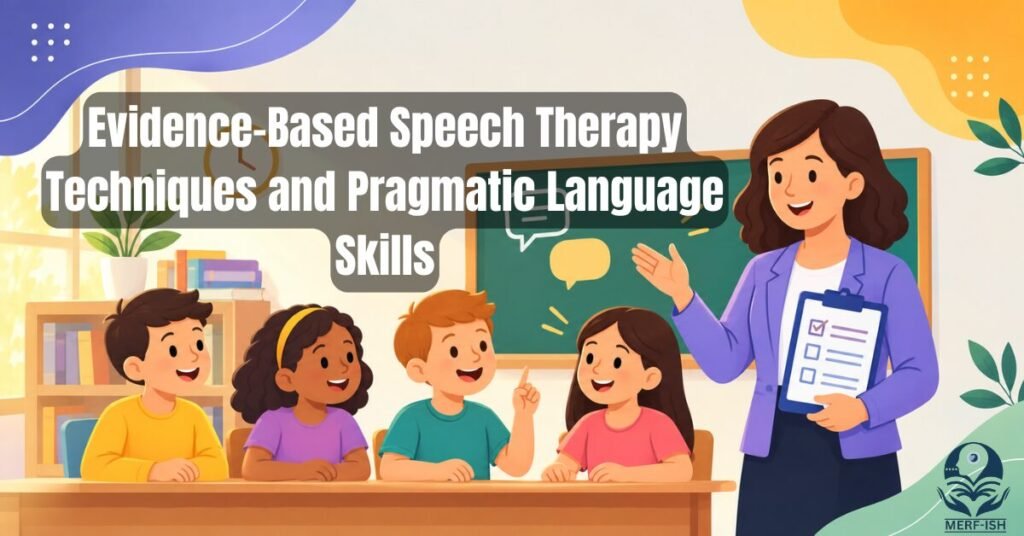
Evidence-based speech therapy uses scientific research, clinical expertise, and individual needs to plan effective communication interventions.
Evidence-Based Therapy
- Motor Learning: Improves the planning and coordination of speech movements.
- Neuroplasticity: Uses the brain’s ability to adapt and form new connections.
- Behavioral Principles: Uses structured practice and reinforcement to develop communication skills.
- Systematic Intervention: Therapy goals are planned, monitored, and adjusted based on progress.
Pragmatic Language
Pragmatic language refers to how a person uses communication appropriately in different social situations.
Common Pragmatic Skills
- Turn-Taking: Knowing when to speak and when to listen.
- Topic Maintenance: Staying focused on the conversation.
- Facial Expression: Understanding and responding to non-verbal cues.
- Audience Awareness: Adjusting communication according to the listener.
- Social Interaction: Using appropriate language in everyday situations.
Clinical Importance
Speech therapy addresses more than pronunciation and grammar. Effective communication also involves social interaction, context, listening, and appropriate language use.
Also read: Learn more about how specialized training prepares clinicians in MERF’s PhD program.
The Brain, Neuroplasticity, and Language Recovery
Neuroplasticity is the brain’s natural ability to adapt, reorganize, and create new neural connections. This ability plays an important role in speech and language recovery after neurological damage.
How the Brain Supports Language Recovery
1. Brain Reorganization
2. Recovery After Stroke
3. Brain Injury Rehabilitation
4. Repetition and Practice
5. Task-Specific Training
6. Motivation and Engagement
7. Intensive Therapy
8. Environmental Support
Conclusion:
Advanced speech and language sciences bring together science, healthcare, education, and rehabilitation to better understand human communication. From childhood speech difficulties to adult neurological disorders, professionals work to identify communication challenges and provide appropriate support. As research and technology continue to develop, speech-language professionals are gaining better tools and approaches for assessment and treatment. Ultimately, the field combines scientific knowledge with a strong focus on helping people communicate more effectively in their everyday lives.
If you’re passionate about understanding human communication at its deepest level, consider exploring advanced training in speech-language sciences. MERF Institute’s PhD programs in Speech-Language Pathology and Audiology are designed to prepare the next generation of researchers and clinicians who will advance this field.
FAQs
Q1: What is the difference between speech-language pathology and audiology?