Introduction: The Gap Between Classroom Learning and Clinical Reality
Every BASLP student faces the same problem.
You study speech and language therapy, understand disorders, memorize case studies — but when it comes to handling a real patient, confidence drops. Theory doesn’t prepare you for unpredictable human behavior, emotional responses, or complex communication challenges.
This gap is exactly where virtual reality is starting to change the game.
Instead of waiting for clinical exposure, students can now simulate real-world therapy sessions using virtual reality in healthcare, gaining hands-on experience before ever stepping into a clinic.
And this isn’t some futuristic concept anymore — it’s already reshaping speech language pathology training globally.
The Problem: Why Traditional BASLP Training Isn’t Enough
Limited Real-World Exposure in Speech and Language Therapy
Most colleges rely heavily on observation-based learning:
- Watching a speech pathologist
- Limited patient interaction
- Controlled case environments
The issue? Real patients are unpredictable.
A child with autism won’t respond like a textbook example. A stuttering patient may react emotionally. A voice disorder case might require adaptive techniques on the spot.
This is where traditional speech therapy education falls short.
What is Virtual Reality in Speech Therapy?
Understanding Virtual Reality in Healthcare
Virtual reality in healthcare creates immersive, computer-generated environments where students can interact with virtual patients.
In the context of speech and language therapy, VR allows:
- Simulated patient interactions
- Real-time response scenarios
- Practice-based learning without risk
Instead of imagining a case, students experience it.
How VR is Transforming Speech Language Pathology Training
From Passive Learning to Active Clinical Simulation
Traditional learning:
- Read → Observe → Assist
VR-based learning:
- Experience → Practice → Improve
With virtual reality, BASLP students can:
- Diagnose virtual patients
- Apply modern speech therapy methods
- Adjust techniques based on responses
This shift is massive. It turns students into decision-makers early.
Real Applications of Virtual Reality in Speech Therapy
1. Stuttering Therapy Simulations
Students can practice fluency techniques in real-time scenarios:
- Public speaking simulations
- One-on-one therapy sessions
- Anxiety-trigger environments
This builds confidence before handling real patients.
2. Autism Communication Training
VR allows controlled exposure to:
- Social interaction scenarios
- Eye-contact training
- Behavioral response handling
This is far more effective than theoretical learning.
3. Voice Disorder Case Practice
Students can simulate:
- Vocal strain conditions
- Therapy exercises
- Patient progress tracking
This improves clinical judgment in speech language pathology.
Role of Digital Speech Therapy Tools in VR Integration
Blending Technology with Therapy
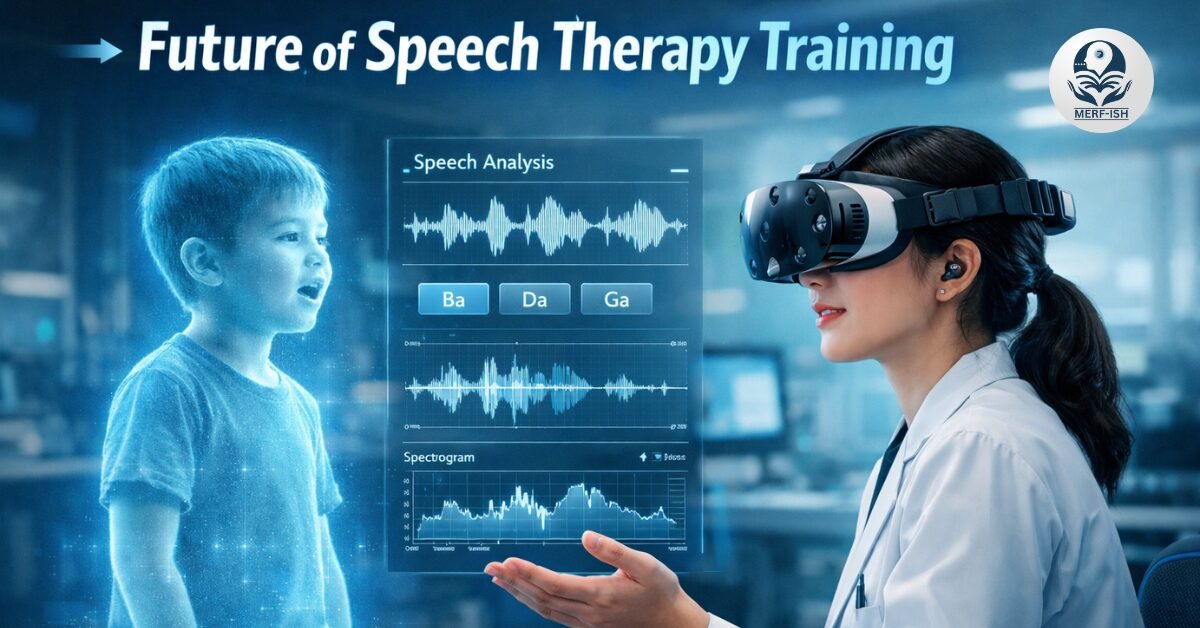
Modern VR systems are powered by digital speech therapy tools, including:
- Voice recognition software
- AI-driven feedback systems
- Real-time pronunciation analysis
These tools help students:
- Identify errors instantly
- Improve therapy accuracy
- Track performance over time
This is where technology in audiology and speech therapy becomes practical — not just theoretical.
Why BASLP Students Need This Shift Now
The Competitive Reality
Let’s be blunt.
A degree alone is not enough anymore.
Students entering the field of speech therapy need:
- Practical exposure
- Confidence in handling patients
- Ability to adapt quickly
Those trained with virtual reality in healthcare will have a clear advantage over those who rely only on textbooks.
Benefits of Virtual Reality for BASLP Students
1. Safe Learning Environment
Students can make mistakes without harming real patients.
2. Repeated Practice
Unlike real clinics, VR allows unlimited repetition.
3. Faster Skill Development
Hands-on experience accelerates learning in speech and language therapy.
4. Improved Clinical Confidence
Students enter clinics prepared, not nervous.
Challenges You Shouldn’t Ignore
Let’s not pretend VR is perfect.
1. High Setup Costs
VR labs require investment.
2. Not a Full Replacement
Real human interaction is still essential in speech language pathology.
3. Learning Curve
Students and faculty need training to use the technology effectively.
The Future of Modern Speech Therapy Methods
Where This is Heading
The integration of:
- virtual reality
- AI
- digital speech therapy tools
will redefine how therapy is taught and delivered.
Colleges that adopt these modern speech therapy methods early will:
- Produce better clinicians
- Attract more students
- Stay relevant in a competitive education market
How Merfish is Driving This Change
Companies like merfish are playing a key role in bridging the gap between education and technology.
By focusing on:
- Content-driven awareness
- Technology adoption strategies
- Digital transformation in healthcare education
merfish helps institutions understand why integrating virtual reality in healthcare is no longer optional.
Why Institutions Should Pay Attention
If you run or manage a BASLP college, here’s the reality:
Students today don’t just choose colleges — they choose outcomes.
Integrating technology in audiology and speech therapy:
- Improves placement opportunities
- Enhances institutional reputation
- Attracts tech-aware students
Ignoring this shift means falling behind.
The Bigger Picture: Redefining Speech Therapy Education
This is not just about technology.
It’s about transforming how speech and language therapy is taught:
- From passive to active learning
- From theory-heavy to practice-driven
- From outdated methods to innovation-led education
And virtual reality is at the center of this shift.
Conclusion: The Future Clinician Starts Before the Clinic
BASLP students no longer need to wait for real-world exposure to become confident clinicians.
With virtual reality in healthcare, they can:
- Experience real scenarios
- Practice critical skills
- Build confidence early
The future of speech therapy belongs to those who train smarter, not just harder.
And institutions that embrace this will define the next generation of speech pathologists.
FAQs
1. How is virtual reality used in speech and language therapy?
Virtual reality creates simulated patient environments where students can practice therapy techniques, communication strategies, and diagnosis without real-world risk.
2. Can virtual reality replace real clinical training in speech therapy?
No. It enhances learning but cannot replace real patient interaction. It prepares students better before entering clinical settings.
3. What are digital speech therapy tools used in VR?
These include voice analysis software, AI-based feedback systems, and pronunciation correction tools that improve therapy accuracy and training outcomes.
4. Is virtual reality important for BASLP students?
Yes. It provides hands-on experience, improves confidence, and helps students apply modern speech therapy methods effectively.
5. How does technology in audiology and speech therapy improve careers?
It makes professionals more efficient, improves diagnosis accuracy, and increases demand for tech-savvy clinicians in the healthcare industry.