
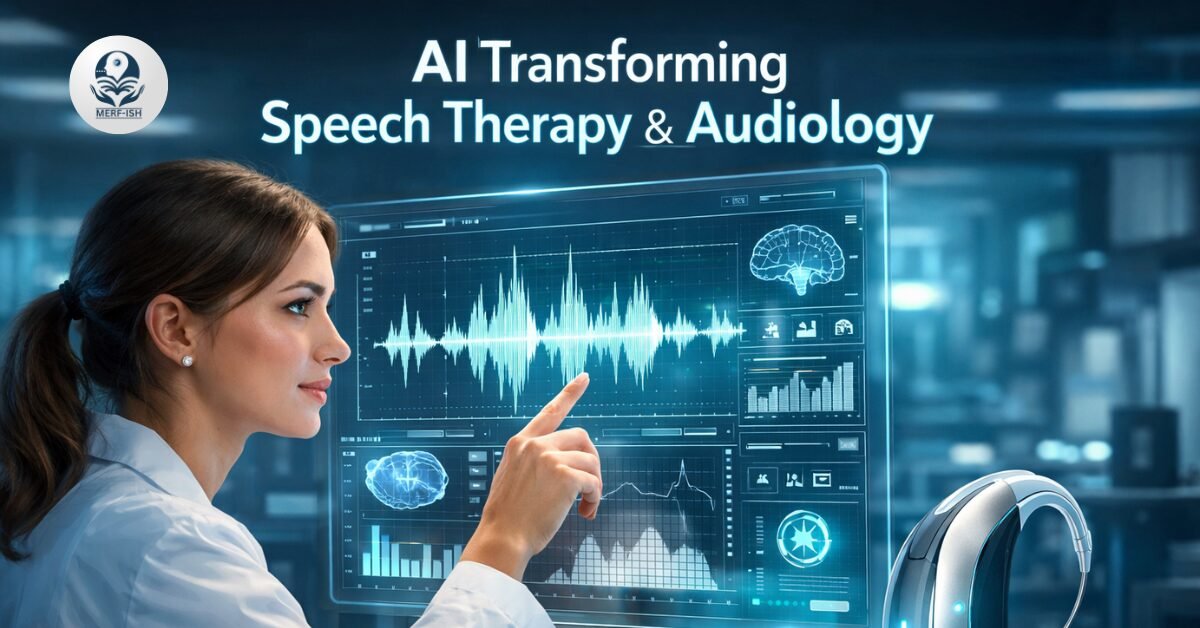
Introduction: The Rise of AI in Healthcare and Communication Sciences
Healthcare is entering a new era where technology is playing a central role in diagnosis, treatment, and patient care. One of the most significant drivers of this change is AI in healthcare, which is helping medical professionals analyze complex data, detect diseases earlier, and provide more personalized treatments.
Fields related to communication sciences, including speech therapy and audiology, are also experiencing this transformation. Traditionally, therapists relied mainly on observation, manual assessments, and experience to diagnose and treat speech and hearing disorders. While these methods remain valuable, technology has introduced new tools that make therapy more precise and efficient.
Today, innovations such as online speech therapy technology, smart hearing devices, and digital speech therapy tools are helping therapists reach more patients and improve treatment outcomes. For students pursuing BASLP, understanding these technologies is becoming just as important as mastering clinical knowledge.
Institutions like Merfish are increasingly recognizing the need to prepare students for this technology-driven healthcare environment. By integrating modern tools and training methods into their curriculum, colleges help students develop skills that match the demands of modern healthcare.
The Growing Role of AI in Speech Therapy
Speech therapy has always focused on helping individuals improve communication abilities. However, technological innovations are changing how therapists evaluate and treat speech disorders.
Why AI in Speech Therapy Is Changing Clinical Practice
In recent years, AI in speech therapy has emerged as a powerful support system for speech-language pathologists. Artificial intelligence can analyze voice recordings, detect pronunciation patterns, and identify speech irregularities that might be difficult to detect through manual observation alone.
Machine learning models can process thousands of speech samples to recognize patterns associated with articulation disorders, fluency issues, or voice abnormalities. This allows therapists to make more informed decisions during assessment and treatment planning.
Another major advantage is speed. Traditional speech assessments often take considerable time, but AI-powered systems can analyze speech patterns within seconds. This does not replace therapists, but it gives them more accurate data to support clinical judgment.
Digital Speech Therapy Tools Improving Patient Outcomes
The development of digital speech therapy tools has also made therapy more engaging and accessible. Many applications now allow patients to practice speech exercises at home while receiving real-time feedback on pronunciation and clarity.
These tools help therapists monitor patient progress remotely and adjust therapy plans based on data collected through the platform. This approach makes therapy more consistent, especially for patients who may not be able to attend frequent in-person sessions.
For BASLP students, understanding how to use these digital tools is becoming an essential skill in modern clinical practice.
Artificial Intelligence in Audiology
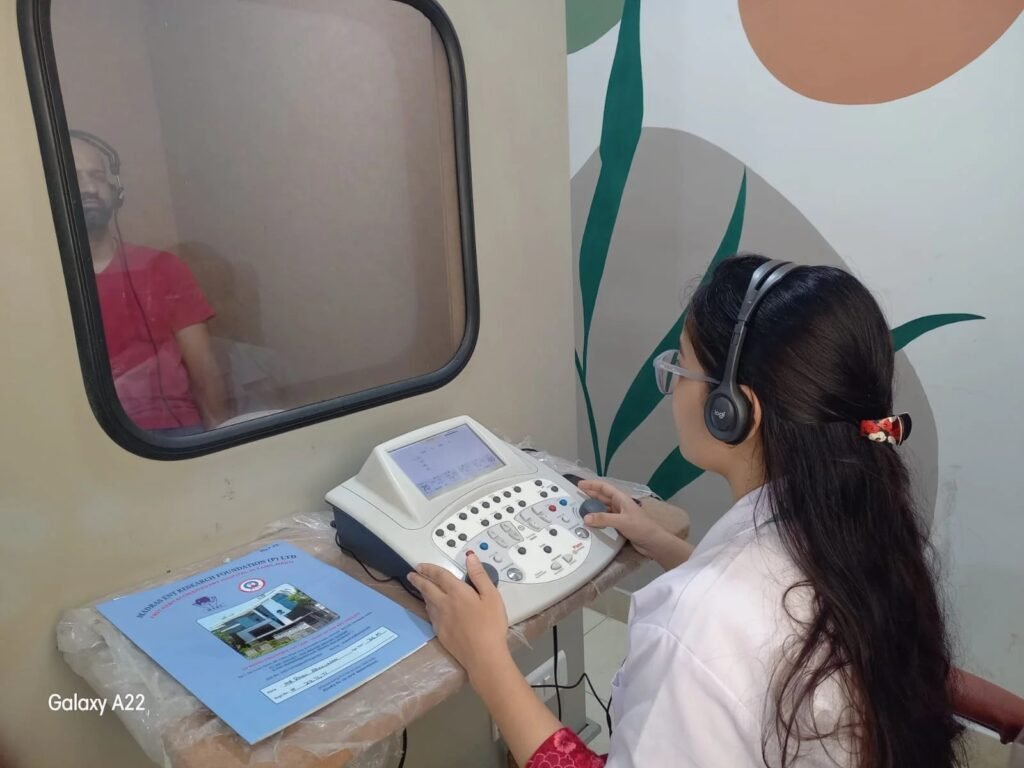
Audiology, the science of hearing and balance, has also experienced significant technological advancement in recent years. The integration of artificial intelligence in audiology is improving how hearing disorders are detected and treated.
How Artificial Intelligence in Audiology Improves Diagnosis
Traditional hearing tests rely on patient responses and manual interpretation by audiologists. While these methods remain effective, AI systems can now analyze hearing data more comprehensively.
Through advanced algorithms, artificial intelligence in audiology can identify patterns in hearing test results and predict potential hearing loss trends. This allows professionals to detect hearing impairments earlier and recommend appropriate treatment options.
AI-driven hearing screening systems can also improve accuracy in noisy environments, ensuring that diagnostic results remain reliable.
Future Technology in Audiology and Hearing Research
Researchers are currently exploring future technology in audiology that goes beyond basic hearing assessment. Predictive AI models may soon be able to analyze lifestyle, environmental exposure, and genetic data to forecast hearing problems before they develop.
Such innovations could transform preventive hearing care, allowing audiologists to intervene before permanent damage occurs.
AI Hearing Aid Technology and Smart Devices
One of the most visible examples of technological advancement in audiology is the development of AI hearing aid technology.
The Evolution of AI Hearing Aid Technology
Earlier hearing aids simply amplified surrounding sounds, often making it difficult for users to distinguish speech from background noise. Modern hearing aids, however, use artificial intelligence to analyze sound environments and automatically adjust amplification levels.
With AI hearing aid technology, devices can recognize speech patterns and prioritize them over environmental noise. This helps users hear conversations more clearly even in crowded places.
Smart Hearing Systems and Daily Life
Many modern hearing aids are now connected to smartphones and other digital devices. These systems can learn user preferences over time, adapting to different listening environments automatically.
This intelligent adaptation significantly improves the quality of life for individuals with hearing difficulties.
Technology in Speech Language Pathology Education
Technological transformation is not limited to clinical practice. Education in communication sciences is also evolving rapidly.
Why BASLP Students Must Understand Modern Technology
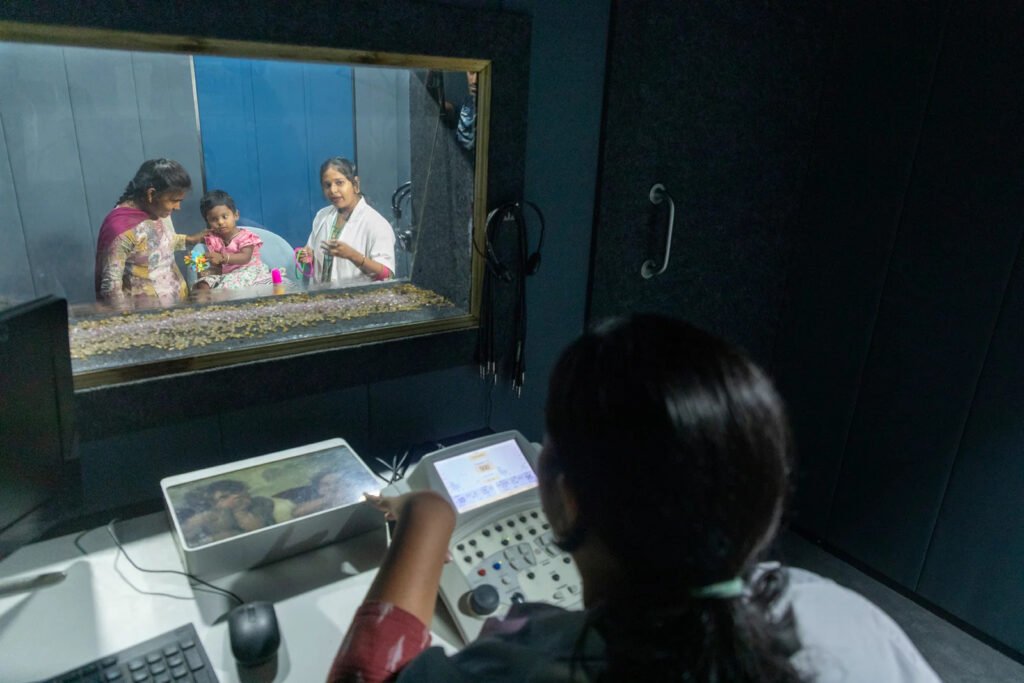
The growing role of technology in speech language pathology means that future professionals must develop both clinical and technical expertise. Today’s therapists need to understand digital assessment tools, remote therapy platforms, and AI-supported diagnostic systems.
Simulation-based learning environments are also becoming common in training programs, allowing students to practice diagnostic procedures using realistic virtual scenarios.
How Institutions Like Merfish Prepare Students
Forward-thinking institutions such as Merfish are adapting their academic programs to include exposure to modern healthcare technologies. By introducing students to digital therapy platforms and advanced diagnostic tools, colleges help them build practical skills that match industry needs.
Through updated training approaches, Merfish ensures that BASLP students are prepared to work in healthcare systems that increasingly rely on technology.
AI Tools for Speech Therapists in Modern Clinical Practice
As healthcare technology continues to evolve, a variety of AI tools for speech therapists are being introduced to support clinical practice.
The Rise of AI Tools for Speech Therapists
Speech therapists now have access to advanced software capable of analyzing articulation, fluency, and voice quality. These tools can identify subtle speech irregularities and provide detailed reports for therapists.
AI-powered voice recognition systems are particularly useful when working with children or individuals who have complex communication disorders.
How AI in Speech Therapy Supports Therapists
Rather than replacing professionals, AI in speech therapy functions as a powerful assistant. It helps therapists conduct faster assessments, design personalized therapy programs, and track progress over time.
By combining clinical expertise with intelligent tools, therapists can deliver more efficient and effective treatment.
Online Speech Therapy Technology and Telepractice
Healthcare delivery has changed dramatically in recent years, with telehealth becoming a widely accepted approach to treatment.
The Growth of Online Speech Therapy Technology
The rise of online speech therapy technology has made therapy accessible to patients regardless of geographic location. Through secure video platforms and digital therapy programs, therapists can conduct sessions remotely while maintaining professional standards of care.
Patients living in rural or underserved areas benefit significantly from this approach.
Benefits of AI in Speech Therapy for Remote Treatment
With remote therapy becoming more common, AI in speech therapy is helping therapists maintain therapy quality even outside traditional clinical environments.
AI-powered platforms can analyze speech during online sessions and provide feedback instantly, helping therapists make real-time adjustments during therapy exercises.
What Technology Is Used in Audiology?
Understanding the tools used in modern audiology is essential for BASLP students entering the field.
Diagnostic Technologies Transforming Audiology
Audiologists now rely on a wide range of digital diagnostic systems, including advanced audiometers, speech recognition analysis tools, and AI-assisted hearing screening devices.
These technologies improve accuracy and help professionals detect hearing disorders earlier.
AI in Speech Therapy and Audiology Integration
Modern healthcare increasingly integrates multiple specialties. AI in speech therapy is now being combined with audiology tools to create comprehensive communication disorder assessments.
This integration helps professionals understand the full range of hearing and speech challenges faced by patients.

How AI Is Shaping the Future of BASLP Careers
The introduction of artificial intelligence is creating new career opportunities for communication science professionals.
New Opportunities for BASLP Graduates
As technology advances, BASLP graduates can work in several specialized roles, including clinical technology specialists, digital therapy consultants, and rehabilitation technology developers.
Understanding how AI in speech therapy works gives professionals an advantage in an increasingly competitive healthcare environment.
Why Colleges Like Merfish Must Adapt
Institutions such as Merfish play an important role in preparing students for this future. By integrating technological education into BASLP programs, colleges help students stay relevant in modern healthcare systems.
The Future of Communication Sciences in the Age of AI
The future of communication sciences will depend on how well professionals adapt to new technologies. AI in speech therapy is expected to become even more advanced, enabling highly personalized therapy plans and more accurate diagnosis of communication disorders.
As healthcare continues to evolve, therapists who combine human expertise with advanced technology will play a crucial role in improving patient outcomes.
Educational institutions, including Merfish, have the opportunity to lead this transformation by preparing students to work confidently with emerging healthcare technologies.
FAQs
1. How is AI used in speech therapy?
AI is used to analyze speech patterns, detect pronunciation errors, and assist therapists in creating personalized therapy plans. It helps improve diagnostic accuracy and therapy monitoring.
2. What technology is used in audiology today?
Modern audiology uses digital audiometers, speech recognition analysis systems, hearing screening software, and AI-supported hearing aids to diagnose and treat hearing disorders.
3. Can AI replace speech therapists?
No. AI can support therapists by providing analysis and data insights, but human expertise is essential for diagnosis, therapy planning, and patient communication.
4. What are the benefits of online speech therapy technology?
Online therapy allows patients to receive treatment from home, improves access for remote communities, and enables therapists to monitor progress through digital platforms.
5. Why should BASLP students learn about AI and healthcare technology?
Understanding modern healthcare technology helps BASLP students stay competitive in the evolving medical field and enables them to deliver more efficient and advanced therapy services.