

Introduction: Why Parents Should Pay Attention to Speech Development
The early years of a child’s life are critical for communication development. During this time, children gradually move through different speech language development stages, learning how to understand sounds, form words, and communicate with the people around them.
However, some parents become concerned when they notice their toddler not talking yet while other children of the same age seem to be speaking more clearly. This situation raises many questions: Is this normal? Should we wait? Or is it time to seek help?
In reality, delayed speech development can happen for several reasons. While some children simply develop language skills later, others may experience speech delay in children that requires professional attention. Recognizing early signs of speech delay allows parents to take action before the delay begins to affect social interaction, learning ability, or confidence.
Many families overlook the early indicators because they assume the child will eventually “grow out of it.” Unfortunately, ignoring early warning signs can make communication challenges harder to address later. This is why understanding speech delay symptoms and monitoring child speech development milestones is essential for parents, caregivers, and educators.
Educational institutions like MERFISH play an important role in preparing professionals who can identify communication challenges early and guide families toward effective support systems.
This guide explores the seven early signs parents should watch for, explains speech delay milestones by age, and discusses how speech therapy for kids can help children improve communication skills.
Understanding Child Speech Development Milestones
Before identifying delays, it is important to understand typical child speech development milestones. These milestones show how children progress through the natural speech language development stages.
Birth to 12 Months
Even before speaking their first word, babies begin exploring communication through sounds and interaction.
During this stage, children usually:
- Respond to familiar voices
- Make cooing and babbling sounds
- Attempt early sound imitation
- Recognize common words like their name
If a baby rarely produces sounds or does not respond to voices, these may be early speech delay symptoms that require observation.
12 to 24 Months
This stage is when vocabulary begins to grow rapidly.
Children typically:
- Use their first meaningful words
- Point to objects while naming them
- Try to imitate adult speech
- Understand simple instructions
Parents often become concerned when a toddler not talking yet reaches age two without attempting meaningful words. While development varies, persistent delays may signal speech delay symptoms that need evaluation.
2 to 3 Years
Language ability expands significantly during this period.
Children generally:
- Combine two or three words into phrases
- Ask simple questions
- Follow basic instructions
- Speak clearly enough for family members to understand
When a child not speaking clearly at age 3 struggles to form understandable sentences, it may indicate potential speech delay symptoms.
When Should a Child Start Talking?
Parents frequently wonder when should a child start talking and what is considered normal development.
Typical expectations include:
- Around 12 months: first recognizable words
- Around 18 months: vocabulary growth begins
- Around 2 years: simple word combinations
- Around 3 years: basic conversations
When these milestones are delayed, it may indicate speech delay in children. In such situations, early assessment is beneficial because the earlier intervention begins, the better the outcomes.
Training programs offered at MERFISH help prepare future speech-language professionals to identify developmental patterns and recommend appropriate communication support for children.
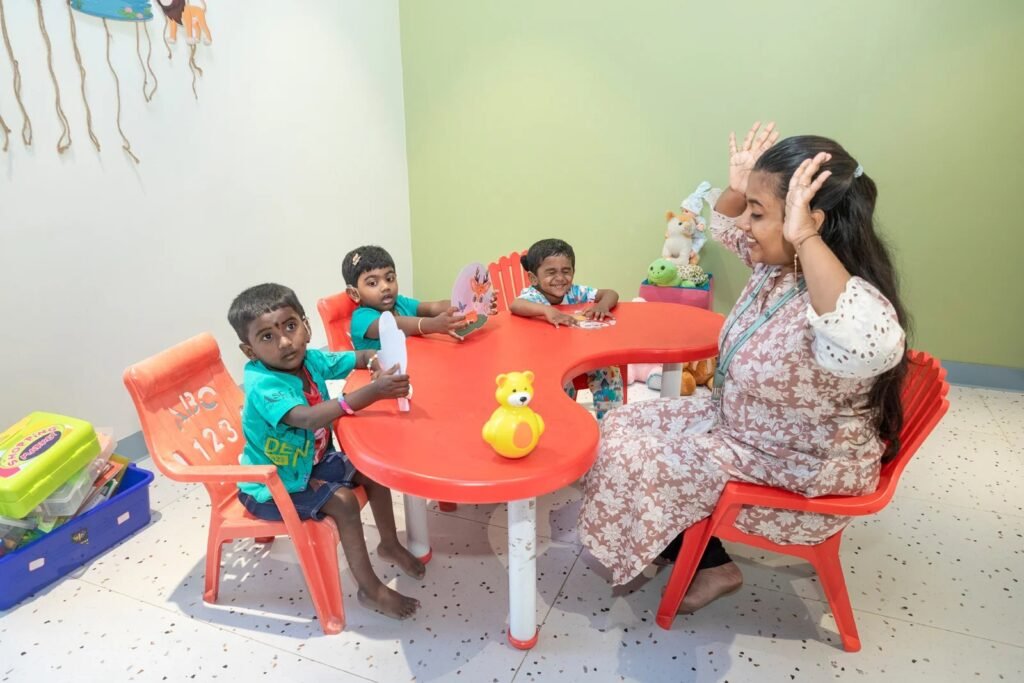
7 Early Signs of Speech Delay Parents Should Never Ignore
Recognizing early signs of speech delay allows parents to take proactive steps before communication challenges worsen.
1. Limited Babbling During Infancy
Babbling is the first step toward spoken language.
If infants rarely experiment with sounds like “ba,” “da,” or “ma,” it could indicate early speech delay symptoms. Babbling helps strengthen the muscles required for speech and prepares children for word formation.
Parents should pay attention to whether their child attempts sound imitation or responds to voices.
2. Toddler Not Talking Yet After Age Two
A toddler not talking yet beyond two years can be concerning for parents.
Children who rarely attempt words, gestures, or vocal communication may be showing speech delay symptoms. In such cases, professionals often recommend structured speech therapy activities for toddlers to encourage communication.
3. Difficulty Understanding Simple Instructions
Language development includes both speaking and understanding.
If a child struggles to follow basic instructions like “come here” or “bring the toy,” it may suggest underlying speech delay symptoms affecting language comprehension.
Understanding language is essential for effective communication development.
4. Very Limited Vocabulary
Children experiencing speech delay in children often show slow vocabulary growth.
Instead of gradually learning new words, they may:
- Repeat sounds instead of words
- Use gestures instead of speech
- Avoid verbal communication
These patterns can indicate speech delay symptoms affecting expressive language.
5. Child Not Speaking Clearly at Age 3
Parents commonly notice when a child not speaking clearly at age 3 struggles with pronunciation.
While minor articulation errors are normal, persistent difficulty forming understandable words can signal speech delay symptoms that benefit from professional guidance.
6. Difficulty Combining Words
By around two years old, most children begin forming short phrases.
Children experiencing speech delays may struggle to combine words into sentences. This may indicate language structure issues linked to speech delay symptoms.
Speech therapists often introduce interactive speech therapy activities for toddlers to improve sentence formation and vocabulary growth.
7. Lack of Interest in Communication
Communication is naturally motivating for most children.
If a child rarely attempts to communicate through sounds, gestures, or words, it may indicate deeper speech delay symptoms affecting social interaction and language development.
Encouraging communication through play, storytelling, and conversation can help stimulate language skills.
Speech Delay Milestones by Age
Understanding speech delay milestones by age helps parents identify when intervention may be necessary.
Age 1
Children should begin attempting simple words and responding to sounds.
Age 2
Vocabulary growth becomes noticeable, and children start forming two-word phrases.
Age 3
Speech becomes clearer, and children begin simple conversations.
When development falls significantly behind these expectations, it may indicate speech delay in children that requires professional support.
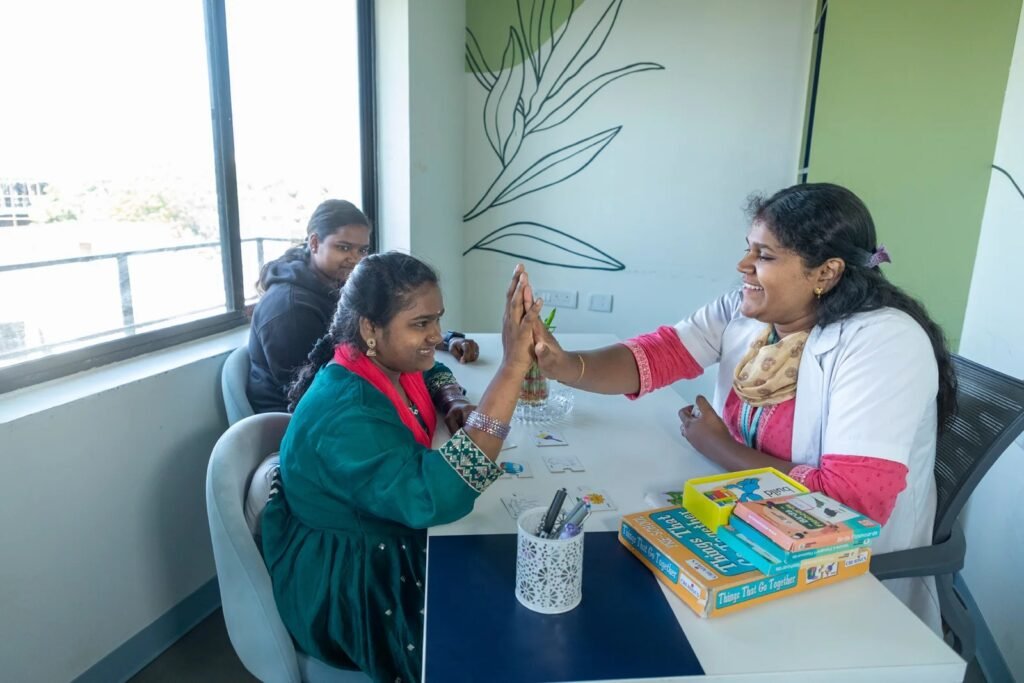
Speech Therapy Activities for Toddlers
Parents can actively encourage language development through simple activities at home.
Some effective speech therapy activities for toddlers include:
- Reading picture books together
- Naming objects during everyday routines
- Singing songs and rhymes
- Encouraging children to imitate sounds
- Playing interactive communication games
These activities help reinforce language learning and often complement professional speech therapy for kids.
Speech Delay Treatment for Children
Early speech delay treatment for children can dramatically improve communication outcomes.
Professional intervention may include:
- Speech articulation exercises
- Vocabulary development training
- Language comprehension activities
- Parent-guided communication strategies
- Hearing evaluations if necessary
Programs like speech therapy for kids focus on strengthening pronunciation, vocabulary, and confidence.
Educational institutions such as MERFISH contribute to this process by training specialists who support children with communication challenges.
Conclusion
Recognizing the early signs of speech delay is one of the most important steps parents can take to support their child’s communication development.
By understanding child speech development milestones, monitoring speech delay milestones by age, and paying attention when a toddler not talking yet or a child not speaking clearly at age 3, families can take timely action.
Early intervention through structured speech therapy activities for toddlers and professional speech therapy for kids can significantly improve language development.
With proper guidance, patience, and early support, many children overcome communication challenges and build strong language skills that benefit them throughout life.
Institutions like MERFISH continue to play a valuable role in educating future professionals who help families identify developmental concerns early and guide children toward confident communication.
Frequently Asked Questions
1. What are the most common speech delay symptoms parents notice?
Common speech delay symptoms include limited vocabulary, reduced babbling, difficulty following instructions, and delayed word formation compared to typical developmental stages.
2. When should parents worry about a toddler not talking yet?
If a toddler not talking yet shows minimal vocabulary by age two or does not attempt meaningful words, parents should consider consulting a speech-language professional.
3. Can speech delay in children improve without treatment?
Some mild cases of speech delay in children improve naturally, but many children benefit significantly from early speech therapy for kids and guided communication support.
4. Why is my child not speaking clearly at age 3?
A child not speaking clearly at age 3 may experience articulation challenges, delayed language development, or hearing-related issues that affect speech clarity.
5. What are simple speech therapy activities for toddlers at home?
Parents can support language development with speech therapy activities for toddlers such as reading aloud, encouraging imitation of sounds, interactive play, and naming objects during everyday routines.